When the Crop Fails: Rethinking Agricultural Lending in a Climate-Volatile World
India's microfinance sector held a gross loan portfolio of ₹3.81 lakh crore as of March 2025. Around 60% was concentrated in agriculture and allied activities. Gross NPAs across MFIs surged to 16% by March 2025, nearly double the 8.8% recorded a year earlier.
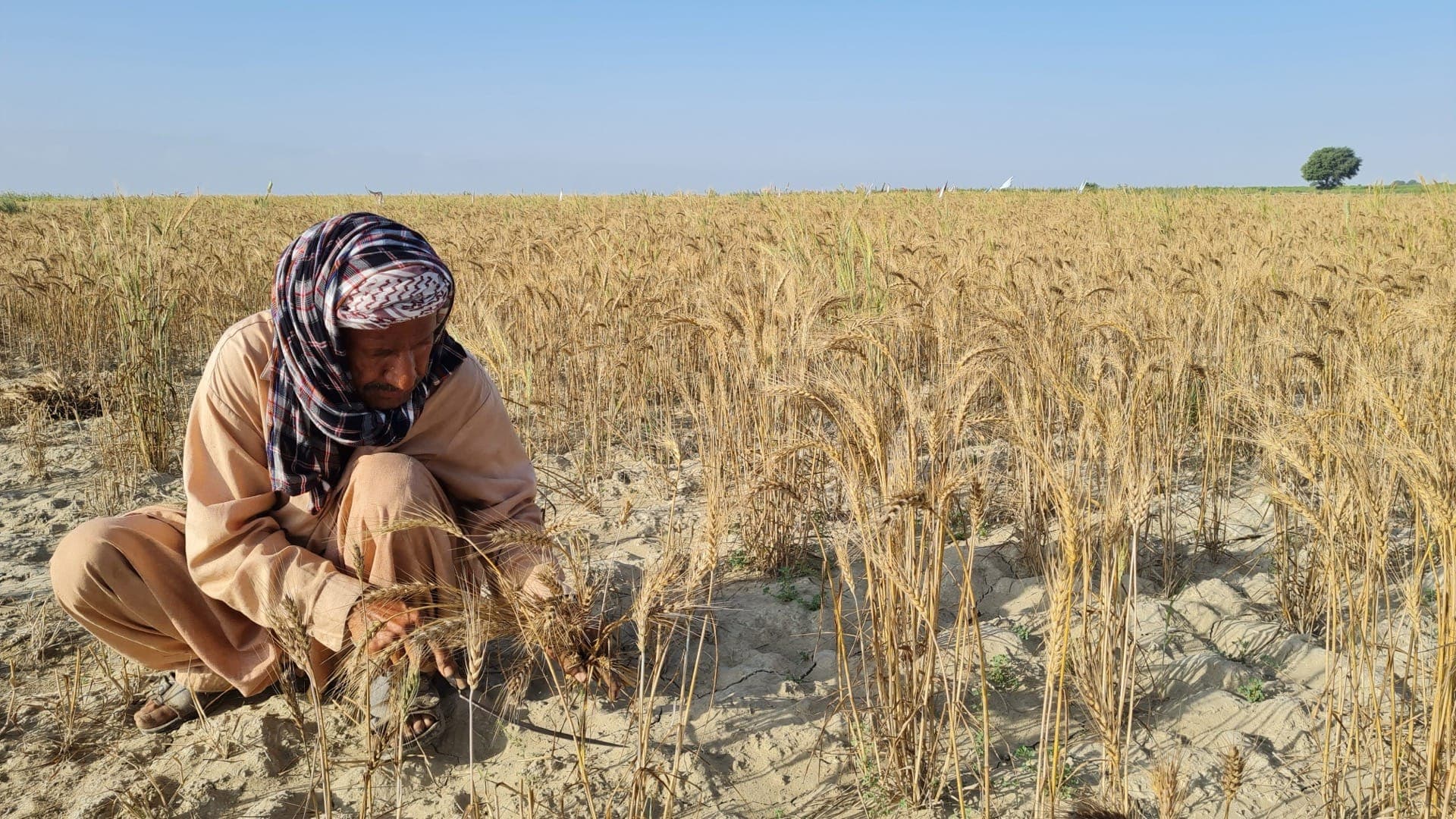
Behind many of those defaults is a seasonal reality: extreme weather damages a harvest, farm income falls, and loan repayments stop.
For lenders, this creates a problem that traditional credit assessment alone cannot solve.
The question is no longer simply whether a borrower has repaid previous loans.
It is whether the borrower can continue repaying when the climate event that affects thousands of farms in the same region occurs at the same time.
Climate shocks can turn crop losses into loan defaults. Discover how index-based crop insurance can strengthen agricultural lending and reduce climate-linked credit risk.
Written byAnupam ShreyFounder & CEO

Why Climate Shocks Are a Credit Problem, Not Just a Farm Problem
Climate credit risk assessment is the process of evaluating how physical climate events can affect a borrower's ability to repay. For agricultural lenders, it is becoming an increasingly important part of understanding portfolio risk.
The connection is straightforward.
Droughts, floods, erratic monsoons, and extreme heat can reduce crop yields. Lower yields mean lower farm income, which directly increases weather risk for agricultural loans.
The problem becomes significantly larger when the same event affects thousands of borrowers simultaneously.
A drought does not typically affect one farmer's repayment capacity in isolation. It can affect an entire village, district, crop cluster, or agricultural lending portfolio at the same time.
This creates correlated credit risk.
A 2025 report by Agri3 Fund, HSBC India, and MicroSave Consulting found that India's 120 million smallholder farmers face increasing financial instability due to climate change, which has reduced farm incomes by 15–18%.
That income compression can flow directly into agricultural loan portfolios.
Access to formal credit is already limited. Only 41% of small and marginal farmers currently have access to formal bank credit, while around 30% of agricultural loans still come from moneylenders.
When formal lenders pull back because of rising NPA risk, the most vulnerable farmers may be pushed toward significantly more expensive informal credit.
This creates a difficult cycle:
Climate shock → crop loss → income decline → missed repayment → higher NPA risk → tighter credit → greater farmer vulnerability
Breaking this cycle requires a way to manage climate risk before it becomes a credit event.
India's Microfinance Credit Stress
As of 2025, India's microfinance credit stress looked like this:
| Indicator | Figure |
|---|---|
| Gross loan portfolio (March 2025) | ₹3.81 lakh crore |
| Share in agriculture and allied activities | 60% |
| Gross NPA rate (March 2025) | 16% |
| Gross NPA rate one year earlier (March 2024) | 8.8% |
| Loans overdue 31–180 days (PAR) | Rose from 2% to 6.2% |
Sources: Brickwork Ratings Microfinance Sector Report, May 2025; India Mongabay, May 2026.
How Index-Based Crop Insurance Changes the Risk Equation
Index-based crop insurance, also known as parametric crop insurance, pays a predetermined amount when a defined weather or climate index crosses an agreed threshold.
The trigger could be based on:
- Rainfall falling below a predefined level
- Rainfall exceeding a predefined level
- Temperature crossing a specified threshold
- A defined number of consecutive hot or dry days
- Other objectively measurable weather parameters
For example, an illustrative policy could specify that if cumulative rainfall in a defined location falls 30% below the agreed threshold during a critical crop-growth period, the insured farmer receives a predetermined payout.
There is no need to calculate the exact value of crop damage before the parametric payout can be triggered.
This matters to lenders because it changes the financial position of the borrower after a climate shock.
A farmer who receives an insurance payout after a drought has additional liquidity available to:
- Make a loan repayment
- Purchase inputs for the next crop cycle
- Meet household expenses
- Avoid high-cost emergency borrowing
- Recover faster after the shock
The insurance payout therefore acts as a financial buffer between a climate event and a potential loan default.
For lenders, this can make climate-exposed agricultural portfolios more resilient.
What Climate Credit Risk Assessment Means for Indian Lenders
Climate-linked loan default risk has historically been captured under broad categories such as agricultural risk, geographic risk, or borrower risk.
But agricultural exposure is not uniform.
A paddy farmer in flood-prone Bihar and a wheat farmer dependent on rain-fed agriculture in Madhya Pradesh may have very different physical risk profiles.
Even two farmers growing the same crop in the same state can face different exposure depending on their location, irrigation access, soil conditions, historical weather patterns, and proximity to climate hazards.
Integrating climate data and insurance information into climate credit risk assessment allows lenders to develop a more granular view of borrower resilience.
Consider two otherwise similar agricultural borrowers:
Borrower A: No climate-risk protection and high exposure to drought.
Borrower B: Similar climate exposure but covered by an index-based rainfall insurance product.
If a severe drought occurs and the agreed insurance trigger is breached, Borrower B receives a predefined payout.
That payout does not eliminate credit risk, but it can provide liquidity during the period when repayment capacity is under pressure.
This creates an important distinction:
Climate exposure and climate vulnerability are not necessarily the same thing.
Two borrowers may face the same physical hazard but have different financial resilience depending on their insurance coverage, savings, diversification, and access to emergency liquidity.
Insurance data can therefore become an additional input into a lender's understanding of climate-linked loan default risk.
The RBI has also formally raised the collateral-free agricultural loan limit to ₹2 lakh per borrower, effective January 2025.
As formal credit access expands, lenders need tools beyond traditional credit scores to understand how climate exposure can affect repayment capacity.
How Lenders Can Integrate Climate Risk Into Agricultural Credit
Climate risk does not need to replace conventional underwriting.
Instead, it can become an additional layer within the existing credit-risk framework.
A lender could begin by:
1. Mapping borrower locations
Identify the location of farms and agricultural borrowers wherever reliable geolocation data is available.
2. Mapping climate exposure
Overlay borrower locations with historical and current drought, flood, rainfall, heat, and other hazard data.
3. Assessing portfolio concentration
Identify whether a large share of the loan book is concentrated in the same climate-exposed geography or crop.
4. Evaluating insurance protection
Determine which borrowers or portfolios have index-based or other relevant climate-risk coverage.
5. Monitoring trigger events
Use real-time and recent weather data to identify emerging stress before it becomes visible through repayment behaviour.
6. Adjusting portfolio strategy
Use climate-risk information alongside traditional financial indicators when considering provisioning, portfolio limits, insurance requirements, renewal decisions, and risk management.
The result is a shift from:
"The borrower has missed a repayment."
to:
"A climate event has occurred, and this portfolio may experience repayment stress."
That distinction can give lenders valuable time to respond.
Where Index-Based Insurance Falls Short for Lenders and Farmers
Index-based insurance is not a complete solution.
The single largest limitation is basis risk.
Basis risk occurs when the index used to trigger the insurance payout does not accurately reflect the actual loss experienced by the insured farmer.
For example, a rainfall trigger may be calculated using a district-level weather station. The station records rainfall above the trigger threshold, so no payout occurs.
But a particular farm within that district may have experienced substantially lower rainfall.
The farmer can therefore suffer crop loss without receiving a parametric payout.
In 2025, Deoria district in Uttar Pradesh recorded an 87% rainfall deficit, illustrating the scale of rainfall variability that can occur across agricultural regions.
For lenders, this means insurance coverage cannot automatically be treated as a guarantee against default.
A borrower may hold index-based insurance and still experience losses that are not captured by the selected trigger.
Other constraints include:
- Limited awareness: Many smallholder farmers are still unfamiliar with parametric insurance and how it works.
- Coverage gaps: Not every crop, geography, or climate hazard has an appropriate index-based product available.
- Trigger design: Poorly designed thresholds can create either excessive basis risk or inefficient pricing.
- Data limitations: Low-resolution or infrequently updated weather data can reduce the effectiveness of a parametric product.
- Behavioural and operational factors: Insurance only provides protection if the farmer is appropriately enrolled and the product is correctly structured for the underlying risk.
This makes product design and climate-data quality critical.
The Role of Better Climate Data in Agricultural Lending
The quality of a lender's climate-risk assessment is fundamentally dependent on the quality and granularity of the underlying data.
A district-level rainfall average can be useful for understanding broad regional risk.
But a lender managing thousands of agricultural loans needs more granular information.
The ideal climate-risk layer can combine:
- Historical weather observations
- Recent weather conditions
- Forecasts
- Satellite-derived information
- Hazard probabilities
- Geographic exposure
- Crop and seasonal information
- Borrower-level location data
- Insurance coverage and trigger information
This allows lenders to move from broad assumptions about "agricultural risk" toward a more specific understanding of weather risk for agricultural loans.
It also enables lenders to identify portfolio concentrations before they become NPA concentrations.
Wrapping Up: Managing the Cost of Crop Failure With Index-Based Insurance
When a crop fails, the financial damage does not stay on the farm.
It moves into loan portfolios, reduces repayment capacity, increases delinquency, and can force lenders to tighten credit precisely when farmers need it most.
Index-based crop insurance, when designed around appropriate weather data and well-calibrated triggers, can help break part of this chain by providing farmers with liquidity following defined climate events.
For lenders, the value extends beyond the payout itself.
Insurance can become one component of a broader climate credit risk assessment framework that considers:
Climate exposure + borrower resilience + insurance protection + portfolio concentration
The policy environment is also moving in this direction. With the RBI raising the collateral-free agricultural loan limit and India's insurance ecosystem continuing to develop climate-linked products, the infrastructure for connecting climate resilience with agricultural credit is gradually taking shape.
The opportunity is not simply to insure more farmers.
It is to build agricultural lending systems that understand where climate risk exists, how it affects repayment capacity, and what financial mechanisms can absorb the shock.
Ready to Protect Your Loans and Income?
If you are a lender, MFI, agri-financier, or farmer operating in a climate-exposed region, understanding your weather risk is becoming as important as understanding your financial risk.
Explore how climate intelligence, index-based insurance, and climate-smart credit solutions can work together to protect agricultural portfolios and strengthen borrower resilience.
00 Comments
Start the conversation
Be the first reader to share a thoughtful response.
Leave a Reply
Your email address will not be published. All comments are reviewed before appearing publicly.